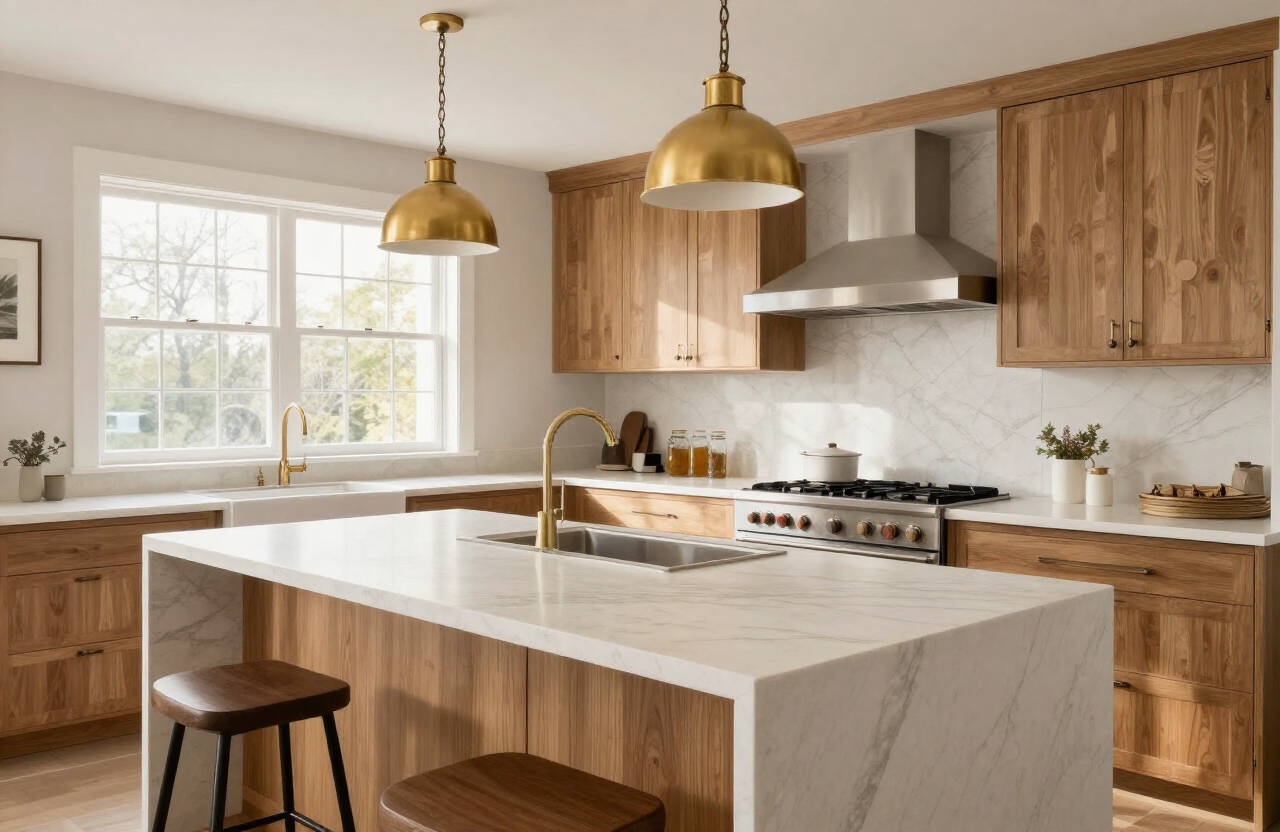
Separate the look of a slab from how it performs.
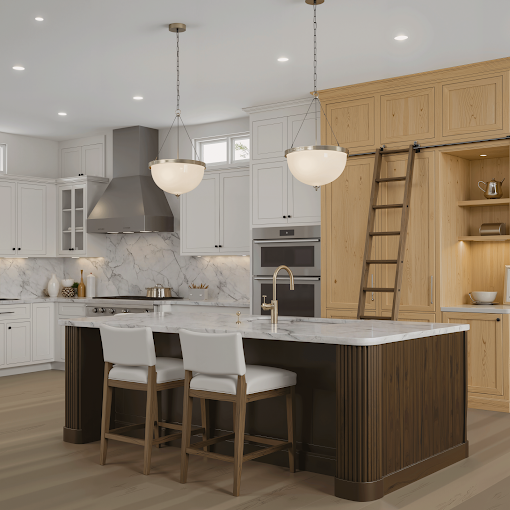
A countertop is the surface you cook on, clean every day and live with for years. The most photogenic slab in a showroom is not always the one that performs in your kitchen. Material, edge, seam placement and maintenance belong in the same conversation, decided before the cabinets are finalized.
01Separate the look of a slab from how it performs
A beautiful vein does not tell you whether a material stains, etches, chips or tolerates a hot pan. Write what the counter must do — prep, baking, a landing place for groceries, a surface children use — before judging samples on appearance alone. Performance and looks are separate lines on the same decision.
02Match the material to how you actually cook
Quartz, granite, marble, butcher block and porcelain each behave differently under heat, acid, moisture and impact. Marble can etch from citrus and vinegar. Butcher block needs oiling and tolerates cutting but not standing water. Engineered quartz is low-maintenance but not heatproof. Ask how each material meets your routine, not which one is currently popular.
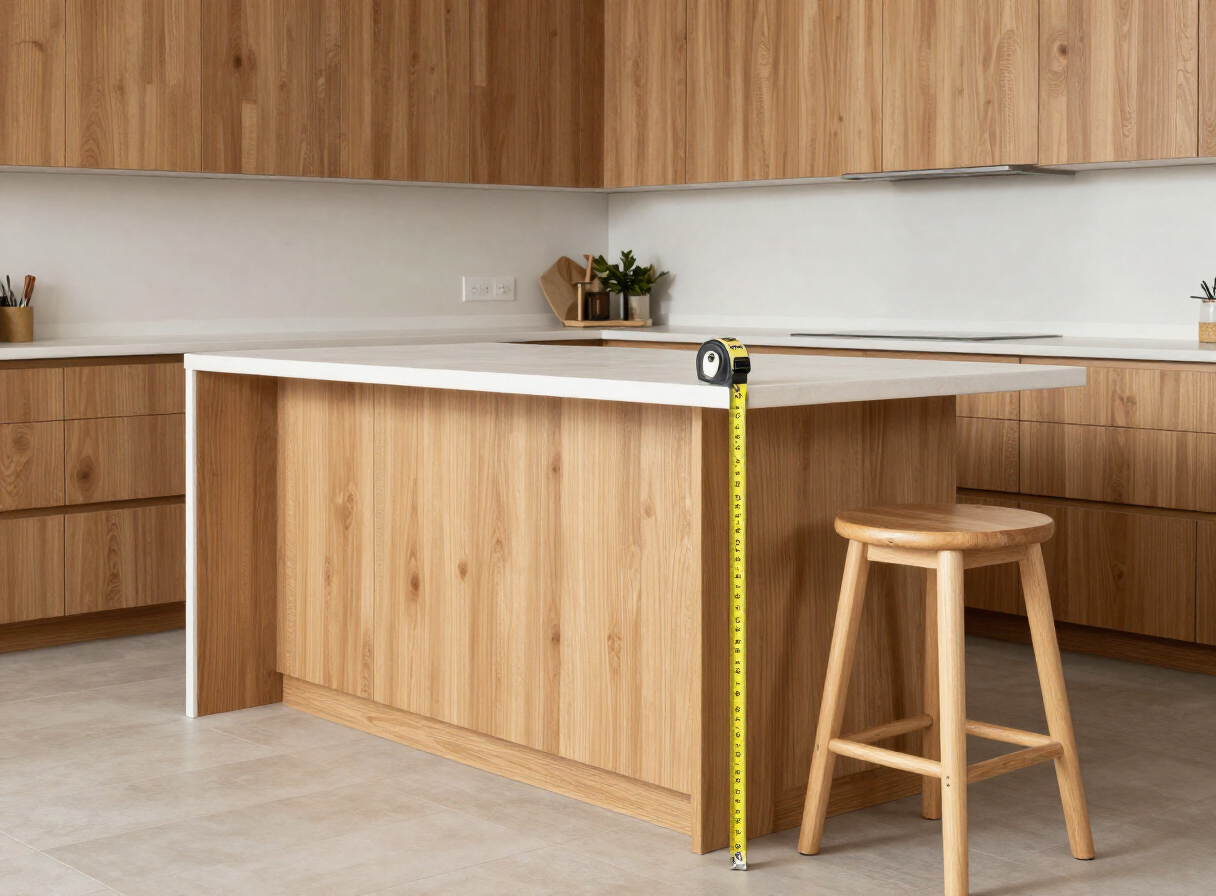
03Plan seams before the slab is cut
A large island or an L-shaped run often needs a seam. Where that seam lands is a layout decision, not an afterthought. Place seams away from the sink and the cooktop, where water and heat concentrate. Confirm slab size and book-matching before the template is cut, so the pattern continues across a joint instead of clashing.
04Choose the edge for use, not only for style
A sharp square edge chips more easily at an aisle the household brushes past. A rounded or eased edge is kinder to daily contact and to children. The edge also changes how the counter reads against the cabinetry. Decide it with the door style and the overhang, not as a default the fabricator picks.
Choose a countertop material, edge and seam plan around how the kitchen is actually used and maintained, not the most photogenic sample.The Sarokey approach
05Understand maintenance before committing
Some natural stones require periodic sealing; others do not. Ask what cleaning products are safe, how often the surface should be resealed, and what a stain or an etch mark actually looks like before it happens. A material you cannot maintain comfortably is the wrong choice even if it photographs well.
06Confirm scope, lead time and jurisdiction
Countertops depend on finished cabinet dimensions, so they sit late in the schedule and carry a lead time. Confirm templating, fabrication and installation as part of the project timeline, not a separate errand. Fairfax County permit needs follow the proposed work; drawings for review are a separate service from permit fees. Choose the counter that fits the kitchen you are building, not the one that only looked right in the showroom.
Further reading
Planning guidance only. Requirements vary by address and scope. Illustrations are not documented Sarokey projects.
EPA · Lead-safe renovation planning